Why TaskRocky?
Let’s skip the "best app ever" noise and talk about what actually matters: why you open a habit app… and why you stop using it.
Both HabitKit and TaskRocky aim for the same outcome → better habits.
But the way they feel in your brain is completely different, and that difference is not cosmetic, It’s behavioral psychology.
UI is not decoration, it’s behavior design
HabitKit: clean, minimal, slightly empty
HabitKit is the kind of app that says: "Here are your habits. Tick them. Done."
It works on a functional level, but when you complete a habit, the feedback is extremely subtle, Almost silent.
You tap → it marks done → it just sits there.
No strong visual closure, No emotional "end point"
So your brain goes: “Wait… did that even count?” (Confused...?)
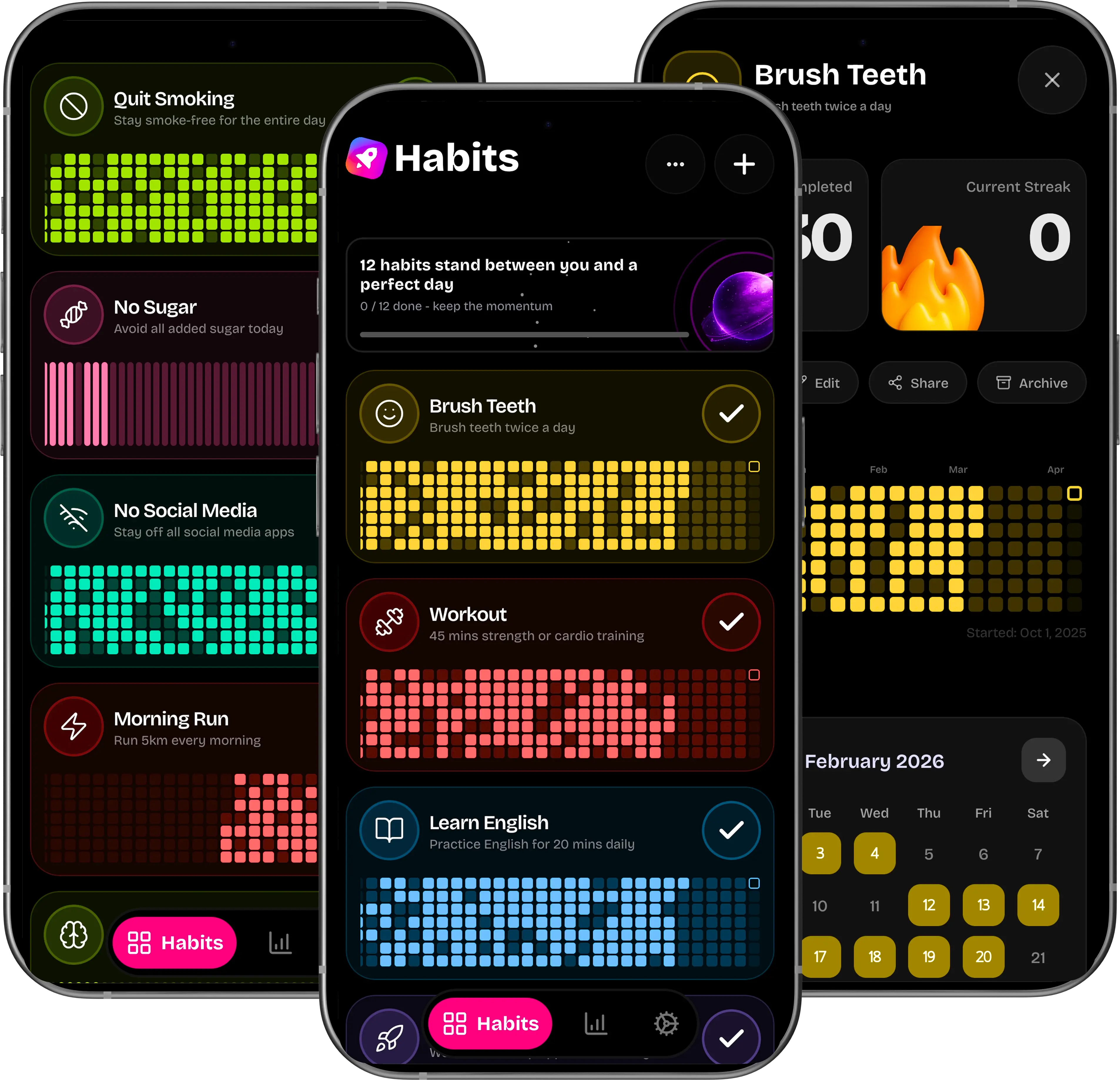
TaskRocky: designed for completion feeling
Now When you complete a habit in TaskRocky:
- It reacts visually
- It feels like something finished
- The interface gives a clear closure moment
Your brain gets a signal: “This is done! Move forward” (Clear ✔)
The science behind why this matters
Dopamine reward loop
Dopamine is not just pleasure it’s a prediction and reward system, Clear feedback + immediate result = stronger reinforcement loop.
Goal Gradient Effect
People move faster when progress is visible. If completion feels real, you’re more likely to continue.
Zeigarnik Effect
Unfinished tasks stay in your head more than finished ones, If closure isn’t clear, your brain keeps it “open.”
Endowed Progress Effect
Visible progress increases motivation to continue!
The real difference: “did I finish it?” vs “I finished it”
HabitKit experience:
- Tick habit
- It stays there
- Feels uncertain if it’s really done
TaskRocky experience:
- Complete habit
- UI reacts
- Habit goes away
- Clear completion feedback
- Feels like “done, next”
Looks like a small thing, but it changes everything! Habits fail not because of logic but because of weak reinforcement.
Why simplicity alone doesn’t work for habits
People love simple apps and yeah, it works.
But with habits, too much simplicity starts to feel empty.
If nothing feels rewarding or “complete,” you slowly stop coming back.
TaskRocky’s design philosophy
TaskRocky was built around one idea:
Make completion feel real.
That’s why it focuses on:
- Strong completion feedback
- Visual progress systems
- Expressive UI interactions
- Reinforcement loops that keep you consistent
What TaskRocky provides (that most habit apps don’t focus on)
- Multiple habit card styles to match different user preferences and workflows
- Multiple views designed for daily focus, weekly consistency, and long-term tracking
- Deep analytics that help you understand patterns, not just log data
- PDF reports for reflection, accountability, and long-term progress tracking
- Share cards that turn progress into social motivation
- Animated progress feedback that reinforces completion in real time
- More expressive UI states that make progress and completion feel clear and satisfying
- Multi-theme system (expanding beyond basic light/dark modes)
- Multilingual support (coming soon)
- 24/7 support focus for user assistance and feedback loop
The underrated part: analytics change behavior
Self-monitoring research shows that people who regularly review their behavior are significantly more likely to sustain habits.
Why?
Because it builds awareness loops:
- You notice patterns
- You adjust behavior
- You improve consistency
Final takeaway
HabitKit is clean, minimal, and functional
TaskRocky focuses on UI first, making the app feel Premium, clear, engaging, and satisfying to use and then reinforces behavior so you actually stay consistent
The real question is not “which app is better?”
It’s:
“Which app makes your brain want to come back tomorrow?”